Getting regional entrepreneurs on the pathway to procurement
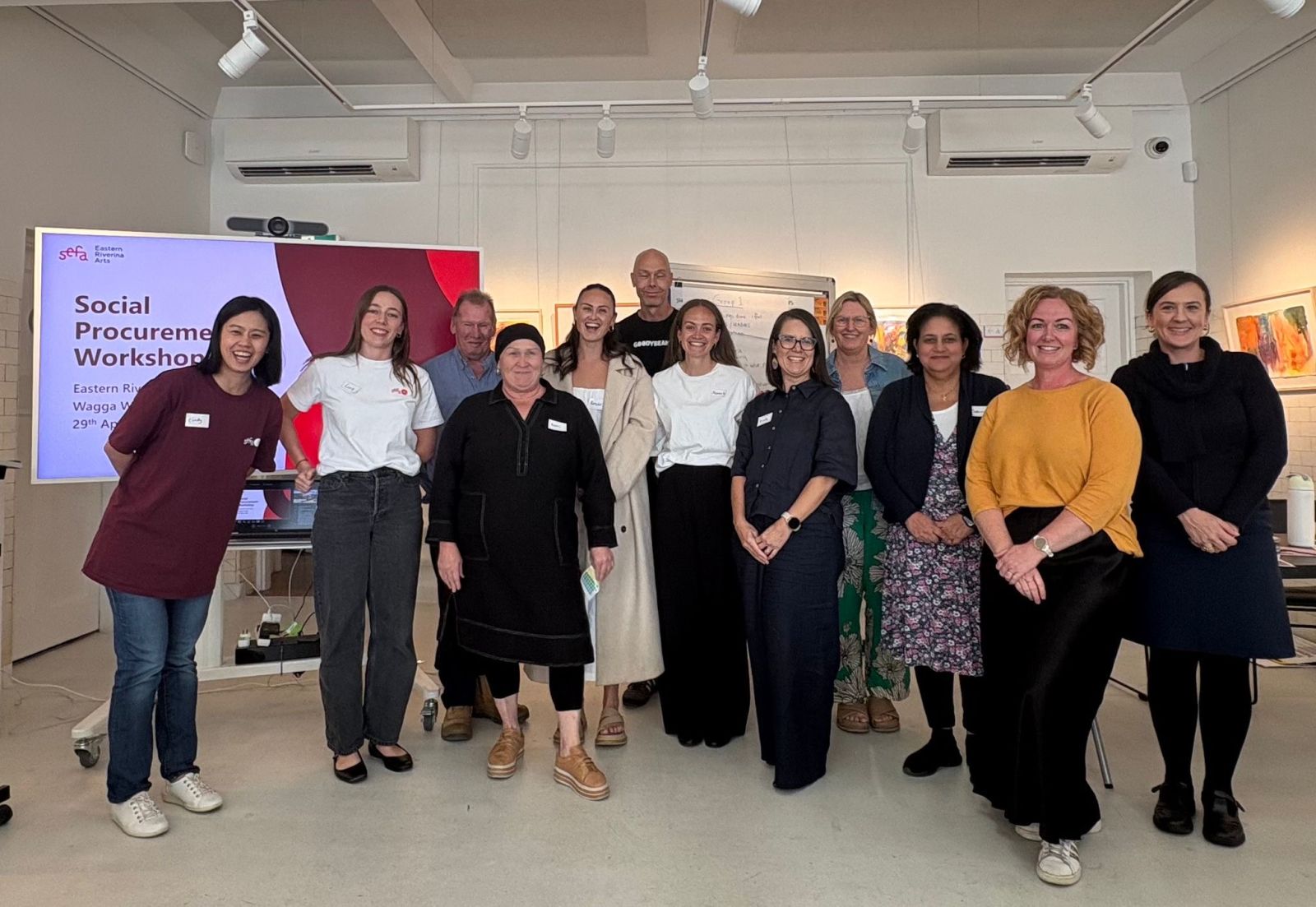
This week, we were lucky enough to spend some time in Wagga Wagga with social enterprises and changemakers from across the Riverina and Murray region to discuss how they might think about positioning to be a government supplier. This experience reinforced something we hear all too often: the interest in government procurement is there on both sides, but the pathway isn’t always clear.
Many organisations on the ground are still getting familiar with what that actually means in practice – from understanding how to position their business for government, to where and how buyers find them, to what “procurement readiness” really looks like. These aren’t small shifts. They require organisations to think differently about how they package what they do, often alongside already stretched capacity. So we brought people together to unpack it.
The day was hosted with Eastern Riverina Arts, bringing together local social enterprises, government, and ecosystem partners. For many in the room, this was their first exposure to the content we heard from:
NSW Treasury on the direction of social procurement and what readiness looks like in practice
Caroline McDaid (WorkVentures), sharing lived experience of supplying to government
Geoff Reardon (ICN), on how to find and access real opportunities
Buy.NSW and the Business Bureau, walking through how to actually get set up and visible
SECNA and Social Traders on verification and certification pathways
The day itself was deliberately hands-on. Through a series of interactive sessions, enterprises mapped where they sit on the procurement journey – from “just exploring” to actively delivering contracts – and unpacked what’s helping or holding them back. We saw enterprises across industries and communities – working in health, digital inclusion, training, food, and community services, supporting young people, First Nations communities and more. Different models, different stages, but a shared ambition to grow.
And then we spent most of the time listening.
We were in a region experiencing significant change – from the renewable energy transition and Special Activation Precincts, to population shifts and major infrastructure investment. At the same time, local businesses are navigating the ongoing pressure of cost of living, workforce constraints, transport challenges, and thin margins. For social enterprises, these pressures are often compounded by the need to deliver both commercial outcomes and social impact.
Some themes came through clearly:
There’s no single pathway into government – and that’s both an opportunity and a challenge
Visibility matters – being in the right places (and clearly communicating your offer) opens doors
Relationships and referrals are still doing a lot of the heavy lifting
Many organisations are closer than they think – but need support to translate capability into procurement readiness
What stood out most was the energy in the room. Organisations are actively thinking about how government could fit into their model – not as the only revenue stream, but as part of a broader, diversified approach.
So what happens next?
The insights from this session will directly inform NSW Government’s social procurement strategy – shaping practical actions to improve access, reduce friction, and better support social enterprises to engage. The focus now is turning what we heard into changes that make the system clearer, more navigable and more responsive to the realities on the ground – so more organisations can move from interest to real participation.
Do more good with Sefa
Whether you are strengthening your impact foundations or planning to scale, we offer finance and advice to help you grow with clarity, confidence and care.